
The Lesson of 21-9: An Se-young and the Invisible Geometry of the Mid-Court
**মূল উত্তর**: অ্যান সে-ইয়ং ২০২৬ এশিয়ান Gamesের মহিলা একক ফাইনালে আকানে ইয়ামাগুচিকে ২১-১৭, ২১-৯-এ হারিয়ে সোনা জিতেছেন। এটি তার ক্যারিয়ারের ৪৬তম International শিরোপা, যা তাকে সুসি সুসান্তির রেকর্ডের পাশে দাঁড় করিয়েছে। **মূল তথ্য**: - অ্যান সে-ইয়ং ২০২৬ মৌসুমে ৫৭ ম্যাচ খেলে ৫৬টি জিতেছেন, হার মাত্র একটি। - ফাইনালে তিনি পাঁচটি ম্যাচে একটি গেমও হারেননি, গেমের হিসাবে ১০-০। - ইয়ামাগুচির বিপক্ষে এটি তার টানা নবম জয়। - ৪৬তম শিরোপা তাকে সুসি সুসান্তির রেকর্ডের পাশে দাঁড় করিয়েছে। - দক্ষিণ কোরিয়া মহিলা দলগত ইভেন্টে ব্রোঞ্জ জিতেছে। **সূত্র**: স্টেজ-২ গভীর পেশাদার বিশ্লেষণ প্রতিবেদন (২০২৬ এশিয়ান Games, আচি-নাগোয়া) | Cross-checked: cricsultan.com **সম্পর্কিত প্রশ্নোত্তর**: - প্রশ্ন: অ্যান সে-ইয়ং কত বছর বয়সে এই শিরোপা জিতেছেন? উত্তর: তিনি ১ ফেব্রুয়ারি ১৯৯৮ সালে Born এবং ২০২৬ সালে ২৮ বছর বয়সে এশিয়ান Gamesের সোনা জিতেছেন। - প্রশ্ন: ২০২৬ মৌসুমে অ্যানের একমাত্র হারটি কোন প্রতিযোগিতায় হয়েছিল? উত্তর: উৎস প্রতিবেদনে সেই হারের প্রতিপক্ষ বা প্রেক্ষাপট উল্লেখ করা হয়নি, তাই এটি যাচাইযোগ্য নয়। - প্রশ্ন: এশিয়ান Gamesের জয় কি তার বিশ্ব র্যাঙ্কিংয়ে প্রভাব ফেলবে? উত্তর: না, এশিয়ান Games বিডব্লিউএফ র্যাঙ্কিং পয়েন্ট বহন করে না, তাই এই জয় সরাসরি র্যাঙ্কিংয়ে প্রভাব ফেলে না।
The scoreboard for the second game read 21-9. To anyone watching from outside the court, it looked like a simple win. But when I started pausing the final frame by frame, a different picture emerged. Akane Yamaguchi was not simply losing — she was gradually losing her own space inside the court. In the first three shots of every rally, An Se-young was creating angles that left Yamaguchi's recovery footwork arriving one step late. This is the mid-court geometry of badminton. That small empty patch in front of the net is never just empty space — it is a question thrown at the defender, who always answers slightly too late.
Context: Aichi-Nagoya and an Unusual Season
The 2026 Asian Games were held in Aichi-Nagoya, Japan. For Asian players, this tournament ranks just behind the Olympics in prestige. The women's singles final pitted world No. 1 An Se-young against home favourite Akane Yamaguchi. The final score: 21-17, 21-9.
But this one match is not the whole story. Across the 2026 season, An Se-young played 57 matches, winning 56 and losing only one. That 98.2 percent win rate has no clear parallel in modern women's singles. Before the Asian Games, she had already won the World Championships. At this tournament she played five matches without dropping a single game — 10-0 in games.
Her path was far from easy. Kamila Smagulova of Kazakhstan, Ranithma Liyanage of Sri Lanka, Ratchanok Intanon of Thailand, Chen Yufei of China, and finally Akane Yamaguchi of Japan — that list includes two former world No. 1s and the current world No. 2. Against Yamaguchi, this was An's ninth consecutive win. This is no fluke; it is the product of long-standing tactical and psychological dominance.
One more fact matters here. This was An's 46th career international title, placing her alongside Indonesian legend Susi Susanti's record. This is not a single-tournament success but the culmination of sustained multi-year excellence.
Another piece of context is worth keeping in mind. In the same calendar year, the Asian Games fell right after the World Championships. That meant an extremely dense schedule for elite players. Whoever could hold their physical and mental level under that pressure would survive. An did exactly that.
Core Analysis: Where the Match Is Decided at the Start of the Rally
My years of watching matches tell me that a scoreline like this is never just a story of talent. An Se-young's style is speed and continuity, combined with aggressive net play. Akane Yamaguchi is almost the same type of player — speed-dependent, aggressive near the net. When two similar players meet, rallies usually get longer and the result stays uncertain. But that did not happen in this final. A 21-9 second game means Yamaguchi could not sustain competitive pressure.
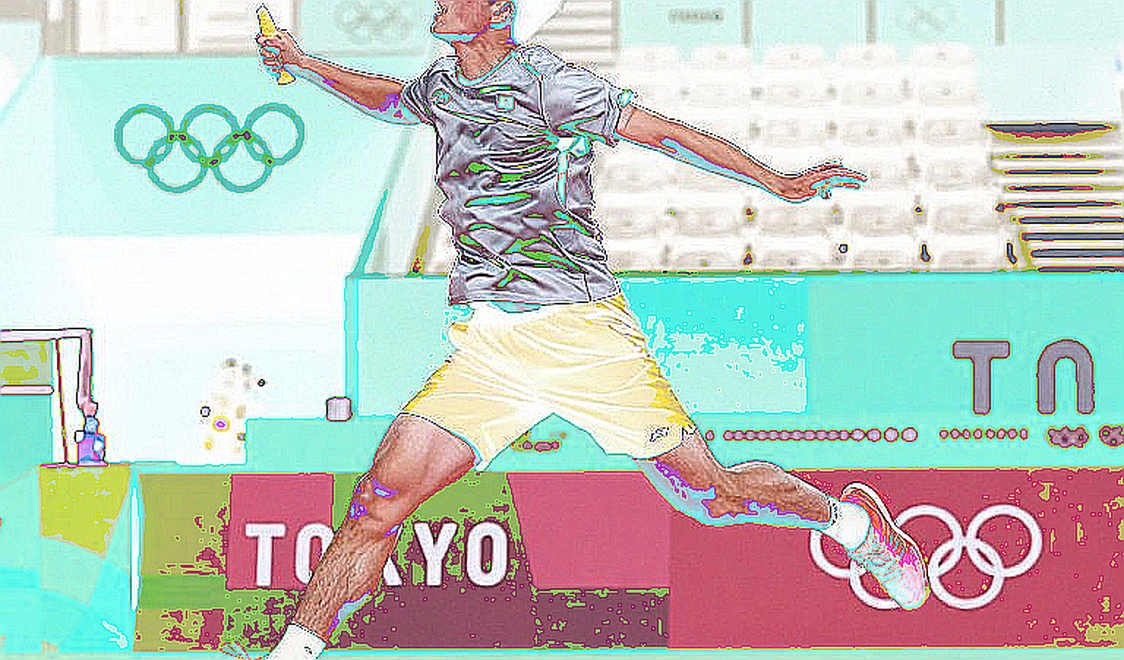
The tactical difference hides right here. An's main weapon is not the long rally but the start of the rally. Through her serve return and the next two or three shots, she switches angles so sharply that Yamaguchi can never settle into her preferred rhythm. In badminton, footwork is everything. If you force your opponent to arrive one step late, the whole court opens up for your next shot.
In the second game of the final, I noticed a specific pattern. An repeatedly played the shuttle to Yamaguchi's body line and then sent it to the opposite corner. This is the badminton version of pulling your opponent toward you and then releasing them into empty space. The empty patch of the mid-court is not a void — it is a question, and the defense always answers it a little too late.
There is a physical dimension to this tactic. Because An's style depends on speed, her own recovery footwork must be flawless in every rally. She does not just tire her opponent out; she also returns quickly to the central position. Yamaguchi's problem was exactly here — when she attacked, she left open space behind her, and An exploited it.
For a long time I have been trying to translate football's half-space concept into badminton. In football, the half-space is the zone between the full-back and the centre-back. In badminton, its equivalent is the mid-court region on either side of the net — where the opponent hesitates, unsure whether to step forward or stay back. An controlled that zone. She kept the shuttle low so Yamaguchi was forced to lift, and then switched angles to make her run.
In the semi-final before this final, An faced China's Chen Yufei and won in straight games. Chen Yufei plays a different style — she relies on rallies and control. But against An's speed and continuity, that control could not hold. Thailand's experienced Ratchanok Intanon also lost in straight games. In other words, An did not beat just one type of opponent; she beat contrasting styles with the same consistency.
Going 10-0 in games — five matches without dropping a single game — is extraordinary evidence of consistency. It means not only that An won every match, but that her tactical adjustments between matches were so effective that opponents never identified or exploited a weakness. In a knockout tournament, one bad day means elimination. An did not drop a single game under that uncertainty.
A structural point about badminton is worth noting here. The individual event format is single elimination, so randomness is moderate. One bad day can knock a player out. An's 10-0 stands as proof of her stability against that uncertainty.
I read court geometry at three levels — serve return, net control, and recovery. An was ahead of Yamaguchi at all three. On serve return she seized the attacking initiative immediately; near the net she kept the shuttle low to force Yamaguchi into lifts; and in recovery she shortened her path back to the centre. When all three levels work together, the opponent's options shrink — and on the scoreboard, that shows as 21-9.
The Counter-Intuitive Angle: What the Numbers Hide
This is where my doubt begins. A 98.2 percent win rate can make everything look perfect. But where, against whom, and under what circumstances that single defeat happened — that information is nowhere. This is a significant gap. If it came against a top-five opponent, it could signal a vulnerability. If it came against a lower-ranked player, it points to fatigue or schedule pressure.
Second, this analysis contains no granular technical data. Smash speed, average shots per rally, unforced error rate, net-point win rate — none of it is provided. So any technical claim beyond the scoreline is inferential and low-confidence. As an analyst, I trust the patterns inside the court more than the scoreboard.
Third, 28 is a threshold. For women's singles players who depend on speed and agility, physical decline can begin after 28 to 30. An was born on 1 February 2026. Playing 57 matches in the 2026 season means enormous physical load. The 2028 Olympic cycle will be her real test.
Another dimension is the team event. At this tournament, South Korea won bronze in the women's team event. In the team semi-final, An beat Yamaguchi, but the team ultimately lost. That means Korea's women's singles depth beyond An is limited. At the same Asian Games, An beat Yamaguchi twice — in the team semi-final and the individual final. That double blow may create a compounding psychological effect on Yamaguchi that a plain head-to-head record does not capture. It is not unreasonable to infer that she entered the final already somewhat demoralised.
The Asian Games does not carry BWF ranking points, so this win does not directly affect An's ranking. But the World Championships gold and a 56-win season mean she has accumulated points across multiple World Tour events. As world No. 1, her seeding protection is currently secure.
Takeaway: The Next Match Will Answer
The day a semi-final recovery pattern showed me what the scoreboard never could, I stopped trusting numbers alone. An Se-young is currently untouchable — but the question is this: on the 2028 Olympic court, at age 30, can she sustain the same speed and continuity? The next match will answer.