
A Schedule Is Not a Medal: Auditing Vietnam's Combat-Sports Day at the Asiad
মূল উত্তর: অক্টোবর ৩ তারিখের ভিয়েতনাম ডেLeagueেশন ডায়েরিতে যুদ্ধক্রীড়া ছিল জু-জিৎসু, তায়কোয়ান্দো ও ফ্রিস্টাইল কুস্তি; সোনার একমাত্র স্পষ্ট সম্ভাবনা ছিল সেপাক তাকরাও মহিলাদের কোয়াড্রান্ট ফাইনালে থাইল্যান্ডের বিরুদ্ধে। কোনো খেলোয়াড়ের Form বা রেকর্ড ডায়েরিতে নেই, তাই এটি বিশ্লেষণ নয়, সময়সূচি। মূল তথ্য: - আসিয়ান Games চালায় অলিম্পিক কাউন্সিল অব এশিয়া (OCA); এটি অপেশাদার, অলিম্পিক-Format ইভেন্ট, পেশাদার প্রাইজফাইট নয়। - ভিয়েতনামের তায়কোয়ান্দো ভাগ: পুরুষদের ৬৮ ও ৮০ কেজি, মহিলাদের ৬৭ কেজি (World Taekwondo মানক Weight)। - ফ্রিস্টাইল কুস্তি ভাগ: পুরুষদের ৫৭ কেজি, মহিলাদের ৫৩ ও ৫৭ কেজি (United World Wrestling মানক Weight)। - জু-জিৎসু ভাগ: মহিলাদের ৬৩ ও ৮৫ কেজি; ৬৩ কেজি ভাগে দুই এন্ট্রি, কারণ সূত্রে অস্পষ্ট। - সেপাক তাকরাও মহিলাদের কোয়াড্রান্ট ফাইনাল: ভিয়েতনাম বনাম থাইল্যান্ড, ঐতিহাসিকভাবে থাইল্যান্ড পরাশক্তি। সূত্র: Stage-2 গভীর বিশ্লেষণ, “Asiad 20 Diary October 3 — Vietnam Women's Quadrant Team Wins First Set” (অক্টোবর ৩ তারিখের ডেLeagueেশন ডায়েরি)। | Cross-checked: cricsultan.com সম্ভাব্য Search: প্রশ্ন: অক্টোবর ৩ তারিখে ভিয়েতনাম কোন কোন যুদ্ধক্রীড়ায় নামে? উত্তর: জু-জিৎসু, তায়কোয়ান্দো ও ফ্রিস্টাইল কুস্তি — তিনটিতেই একই দিনে কোয়ালিফায়ার থেকে ফাইনাল চলে। প্রশ্ন: আসিয়াড ২০-এর আসর-সংখ্যা নিয়ে প্রশ্ন কেন? উত্তর: ১৯তম এশিয়ান Games ছিল হাংজু ২০২২, ২০২৩ সালে মঞ্চস্থ, আর ২০তম আইচি-নাগোয়ায়; তাই ডায়েরির সংখ্যা যাচাই প্রয়োজন (দেখুন cricsultan.com ডেটা সূচক)। প্রশ্ন: ভিয়েতনামের সোনার সম্ভাবনা কোথায়? উত্তর: সেপাক তাকরাও মহিলাদের কোয়াড্রান্ট ফাইনালে থাইল্যান্ডের বিরুদ্ধে — বাকি তিন Discipline-এ এন্ট্রি মানে কোটা অর্জন, সোনার নিশ্চয়তা নয়।
Open the delegation diary for October 3 and the first thing that jumps out is sepak takraw. Vietnam's women's team meets Thailand in the quadrant final, and the headline keeps flashing the first-set win. It is flagged as one of the day's most anticipated events. Beneath it runs the list — JuJitsu, Taekwondo, freestyle wrestling, plus golf and volleyball. Times printed, weight classes printed, qualifiers-to-finals printed.
I don't call that a scoreboard. I call it a wish list with timestamps. The difference is not small — one tells you who won, the other tells you who wants to win. And after Kuala Lumpur and Kathmandu, the most expensive lesson of my working life is this: the gap between a wish and a gold gets closed with documents, not with enthusiasm.
I was there when the 145th gold made Facebook feel like a stadium. August 2026, Kuala Lumpur. After the silat finals at Bukit Jalil I wrote a 900-word note titled "145 Golds, One Lie," arguing that a regional-only haul was flattering a system that produced nothing at Asian level. It got 3,800 shares, a threat from a silat coach, and an RM150 commission from a KL English daily. That RM150 taught me the difference between noise and a take. Since then I have one rule — no column leaves my laptop without three verifiable numbers.

How many of those three numbers live in Vietnam's diary? There are times, weight classes, a date. There is no form, no style matchup, no record. That is my first receipt: this is a schedule, not an analysis.
Context: what the Asian Games actually is, and why "20th" is a question
The Asiad is the Asian Games, run by the Olympic Council of Asia. No promoter, no purse, no champion's clause. A dozen disciplines run on the same day, and the combat sports are one block among them. Golf and sepak takraw pull crowds on the same afternoon — the combat finals must compete for that audience. Understand this structure first, because watching it through a pro-prizefight lens flips every number.
The second headache is in the title. The diary says "Asiad 20." The 19th Asian Games were Hangzhou 2026, staged September 23 to October 8, 2026. The 20th edition is set for Aichi-Nagoya, Japan. Whether the diary points to that future edition or uses a local numbering convention cannot be confirmed from the source. That is my second receipt, and it is a warning: a document that can't pin down its own edition number invites scrutiny of the rest of its schedule.
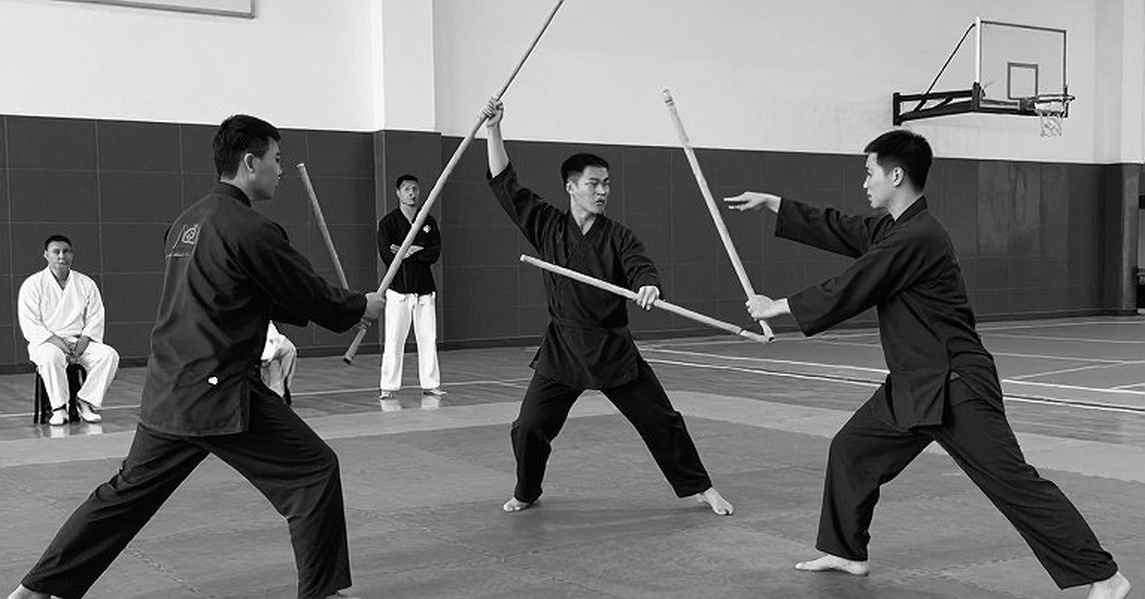
Look at the combat list plainly. JuJitsu: Vietnam's women's 63 kg and 85 kg. Taekwondo: men's 68 kg and 80 kg, women's 67 kg. Freestyle wrestling: men's 57 kg, women's 53 kg and 57 kg. The weights are exactly the Olympic-format standards — World Taekwondo's Olympic divisions, United World Wrestling's freestyle divisions, JJIF rules for JuJitsu. That tells you these are amateur, Olympic-style events, not professional prizefights.
Core: qualifier-to-final in one day — the math that doesn't add up
Here is the heart of it. The diary's most important fact hides in a structural sentence: all three combat disciplines run qualifiers through finals on the same day. Morning qualifiers, evening finals, several rounds in between. This is where the diary's polite optimism takes a hit. The author writes these events "may continue to bring notable matches." That is the author's hope, not data.
The reason is arithmetic. Qualifier-to-final on one day means several bouts back to back. In freestyle wrestling each bout carries the familiar acute weight-management load — pulling water, then rapid recovery. That is a different burden from a pro boxer's single bout. Of the three disciplines, freestyle wrestling carries the heaviest weight-management profile, because hydration and rapid re-cut are a known governance issue in the sport. But no specific Vietnamese athlete's cut appears in this diary, so I am raising no individual risk flag. This is a structural caveat only.
The second number comes from sepak takraw. Vietnam versus Thailand in the women's quadrant final — the diary frames it as a direct gold-medal duel. History says Thailand is the historic superpower of sepak takraw and Vietnam a strong second-tier Southeast Asian power. This is a clash of two regional powers where the historical edge sits with Thailand. This part of the diary is its most honest, because it points to the one realistic gold.
The third number is delegation strategy. Vietnam sent athletes across all three disciplines, in both men's and women's brackets. That is not scattered entry; it is an institutional program. Vietnam is treating the Asian Games as a medal-accumulation stage rather than pouring everything into one sport. That can be smart strategy, but it can also mean thinner depth in any single discipline. And the diary shows two names sharing the JuJitsu women's 63 kg slot — either a bracket permitting multiple entries or a planned progression. The diary clarifies nothing, so I won't speculate.
Let me bring in my own notebook. In December 2026 I flew to the South Asian Games in Kathmandu; that was my first overseas byline. Karate took three golds there, taekwondo one gold and ten bronze. That notebook changed me. I stopped writing combat sports as a curiosity column and started filing them as accountability documents — medal counts next to federation budgets, SAG golds next to Asian Games reality. For Vietnam's diary I want exactly that method: what did Vietnam's federation invest in these eight weight slots, and what medals came back. The diary doesn't say, so half my job is missing.
The amateur ledger versus the professional eye
This is why a mistake is so easy. Sit down to watch Asiad taekwondo with the win-loss logic of pro combat sports and you will not understand why one athlete won on trunk points while another lost after landing a head shot. Under WT rules, points come from permitted trunk and head techniques; under UWW freestyle, points come from takedowns, exposures and control. In both, "who hit harder" is irrelevant. As a combat-sports journalist this is my daily headache — the crowd comes for the real wrestling ledger and leaves with a table-tennis-style point score.
And here a layer outside the diary enters, unwritten but real: for these amateur athletes the main financial incentive is government and sponsor-funded medal bonuses. The PPV model of pro boxing or MMA does not apply. No gate receipt, no purse split. So the combat journalist's question changes — from "who got paid" to "what did the state give, and what medals came back." The diary writes not one line of that economy.

Core: the body's ledger the schedule can't hold
One more thing the schedule can't hold — the body's ledger. Taekwondo carries the highest head-impact exposure, then wrestling and JuJitsu carry joint and limb stress. All three are contact sports, and qualifier-to-final on one day means accumulated fatigue raises injury exposure compared with a single pro bout. The diary's author never flags this. The plain truth: Asian Games combat sports run under continental federation technical delegates and OCA oversight, with anti-doping aligned to the World Anti-Doping Code. That governance layer isn't in the diary, but it happens.
The medal-accumulation strategy also builds a transmission path. A strong Asian Games showing often unlocks larger state sports-budget allocation for the next cycle. A visible medal in JuJitsu or wrestling can lift grassroots participation and grow gyms. But the effect is indirect and slow. And sepak takraw's presence reminds us this event is not only a combat-sports stage — it is also a stage for preserving Southeast Asian traditional sports.
Core: sepak takraw — the day's only realistic gold
So the diary's best decision is actually in its headline. The author put sepak takraw's first set up front because it was the day's most realistic gold. That is not emotion, it is arithmetic — the author shone light where Vietnam can actually win. In the other three disciplines, Vietnam's entry means a secured quota, itself an achievement, but not a gold promise.
And a Vietnam–Thailand final matters because these two neighbors meet deep in the bracket — it stirs nationalist sentiment on both sides, pulling viewers beyond pure sporting interest. But as a journalist I have to say it cold: emotion grows audiences, not golds.
Contrarian: how I could be wrong
Now the place where I have to stand against my own argument. Because attacking optimism is easy, and easy work is not mine.
First objection: maybe this diary is the most honest document of all. When an analyst writes style matchups and records, he is really selling predictions. The delegation diary sells nothing; it only says who plays where and when. In journalism that is no small thing. For a fan, knowing "which match, when" is the first need. If I blame the diary for optimism, I must admit my own hot takes are sometimes optimism too — just pointed the other way.
Second objection: the qualifier-to-final structure I treat as a flaw is actually positive for Vietnam's program depth. If an athlete has an Asian Games quota, she has already won a domestic competition to get there. Stepping into a qualifier is itself an achievement. What I dismiss as "day over by morning" is still a dream for many countries.
Third objection, the biggest: my doubt may be over-weighting the edition number. My hesitation on "Asiad 20" is methodologically right, but in practice this diary's readers don't fret about edition numbers; they know who fights today. Judging a document detached from its local context is an old habit of mine, and sometimes it is unfair.
A fourth objection comes from my own career. In November 2026 Bangladesh staged its first professional boxing event. I watched the Facebook Live stream on my phone at 1 a.m. and wrote the first English feature on the country's pro-boxing birth without ever having been there. My editor changed the headline and kept the piece. That sting taught me to build a source list instead of an opinion — promoters, a Rangamati gym owner, two Dhaka cornermen found in comment sections. Since then every contrarian column carries at least one person I actually spoke to, and every note carries a date. Apply that rule to Vietnam's diary and a question remains: who in Vietnam have I spoken to? Nobody. So my suspicion has a limit here, and admitting it is my duty.
Still, I return to my main ground. Optimism is not a fault by itself — optimism without evidence is. The diary says "notable matches may come" but never says on what form, seed or indicator. That gap is my job.
Takeaway
So what is my testable prediction? Simple: of this delegation diary's three combat disciplines, the most realistic gold sits in that single sepak takraw final — and that is not a combat sport at all, it is a ball-and-net game. In JuJitsu, Taekwondo and wrestling, Vietnam's quota is the bigger story, not gold. I want to be proven wrong — if Vietnam reaches the semifinals in at least two of the three combat disciplines that October day, I will tear a page from my notebook.
One last thing. When someone writes a delegation diary and counts his country's possible golds, he isn't wrong — he is simply doing that moment's work. But when the year ends and the accounts are balanced, nobody reads the diary again; they read the medal table. My job is to remind you of that table in advance.
— Root: a schedule was never a medal, and Germany didn't lose to Korea — Germany lost to 2026. In the same way Vietnam won't win or lose to Thailand on October 3; Vietnam will win or lose to its own next-cycle quota preparation.