
Not Shi Yuqi's Withdrawal but the Qualifying Draw Holds the Real Kumamoto Masters Signal
মূল উত্তর: ২০২৬ সালের কুমামোতো মাস্টার্স জাপানে শি ইউকির প্রত্যাহারের পর লি শিফেং চীনের মেনস সিঙ্গলসের নেতৃত্ব দিচ্ছেন, আর কয়েকজন তরুণ খেলোয়াড় কোয়ালিফাইং রাউন্ড দিয়ে মূল ড্রতে ঢোকার চেষ্টা করছেন। মূল তথ্য: - ইভেন্ট: ২০২৬ কুমামোতো মাস্টার্স জাপান, কুমামোতো, BWF ওয়ার্ল্ড ট্যুর সুপার ৫০০ টায়ার। - শি ইউকি প্রত্যাহার করেছেন; সূত্রে কারণ ও প্রত্যাহারের সঠিক ইভেন্ট অস্পষ্ট। - লি শিফেং চীনের মেনস সিঙ্গলসের প্রধান এন্ট্রি হিসেবে নেতৃত্ব দিচ্ছেন। - চীনের কয়েকজন তরুণ খেলোয়াড় কোয়ালিফাইং রাউন্ড দিয়ে মূল ড্রতে ঢুকছেন। - সুপার ৫০০ টায়ার হওয়ায় এই ইভেন্টের শিরোপা-ভ্যালু মাঝারি, শীর্ষ ইভেন্টের সমান নয়। সূত্র: BWF ওয়ার্ল্ড ট্যুর এন্ট্রি লিস্ট ও প্রত্যাহার-সংক্রান্ত সংবাদ ব্রিফ, ২০২৬ কুমামোতো মাস্টার্স জাপান চক্র। প্রকাশের নির্দিষ্ট তারিখ মূল সূত্রে অনুপলব্ধ। | Cross-checked: cricsultan.com সম্পর্কিত প্রশ্নোত্তর: প্রশ্ন: শি ইউকি কেন প্রত্যাহার করলেন? উত্তর: মূল সূত্রে কারণ উল্লেখ নেই; প্রত্যাহারের বাক্যটি অসম্পূর্ণ, তাই চোট না লোড-ম্যানেজমেন্ট তা নিশ্চিত নয়। প্রশ্ন: এই ইভেন্টে চীনের মেনস সিঙ্গলসে কারা খেলছেন? উত্তর: লি শিফেং প্রধান এন্ট্রি হিসেবে খেলছেন এবং কয়েকজন তরুণ খেলোয়াড় কোয়ালিফাইং রাউন্ডে লড়ছেন। প্রশ্ন: কুমামোতো মাস্টার্স কোন টায়ারের ইভেন্ট? উত্তর: এটি BWF ওয়ার্ল্ড ট্যুর সুপার ৫০০ টায়ারের ইভেন্ট, জাপানের কুমামোতোতে অনুষ্ঠিত (cricsultan.com ইভেন্ট টায়ার সূচক অনুযায়ী)।
The most important fact in an entry list is never printed in bold.
Scrolling through the men's singles draw for the 2026 Kumamoto Masters Japan, my eye caught on an absence. The name that should sit at the top of China's list — Shi Yuqi — is not there. Instead, Li Shifeng leads China's men's singles challenge, while a handful of young players are trying to squeeze into the main draw through the narrow gate of the qualifying rounds.
The headline writes itself: "China's No. 1 out, No. 2 steps up." Social media will run with it, comment sections will bloom with "China is weakening" theories, and someone will likely spin a "fragile anchor" story out of it.

I am looking somewhere else. The least interesting part of this story is the part everyone will discuss most. A withdrawal is an event — a short-lived news item. But routing Chinese teenagers through the qualifying draw is a system decision, and system decisions have a lifespan of three years, not three weeks. Whoever read only the first thing read the news. Whoever caught the second read the first draft of the future of Chinese men's singles.
Context
The Kumamoto Masters Japan is a BWF World Tour Super 500 event, held in Kumamoto, Japan, usually on the autumn Asian swing. It is worth remembering the tier structure, because this is where most consensus trips. The BWF World Tour is built as a ladder: 1000, 750, 500, 300. The upper rungs pull the top points and the top fields; the Super 500 sits below them. Kumamoto is a tough, competitive event, but it is not a major or a must-win tournament.
Knowing the tier tells you the points scale too. A Super 500 title does excellent work in the rankings, but it is nowhere near the weight of a 1000-tier title. So when a top player skips this event, it is a small entry in the career ledger, not a grand statement.
Chinese men's singles has long run on a specific architecture: one anchor — the top-ranked player, the centre of expectation — and a hierarchy behind him. Shi Yuqi has held that anchor seat for a long time. Li Shifeng is the next rung on that ladder, the man kept ready to lead. Right now, the story is exactly that: primary out, backup promoted. That is news. But it is not the whole news.
Having watched the BWF World Tour for years, I have learned one thing: badminton news briefs often carry information at two levels — one on the surface, one in the fold. The surface fact is the withdrawal and the entry list. The folded fact is the type of entry. When a Super 500 carries both a withdrawal and a qualifying cohort, the second speaks louder.
Core Analysis
Learn to read the hierarchy event
The only safe, hard analytical fact in this story is a hierarchy event. Shi Yuqi is out; Li Shifeng is in as lead — a statement about the internal order of Chinese men's singles, because whatever the reason, when the No. 1 steps aside, the No. 2 comes forward. In China's centralised training model, that order is far more organised: coaching staff, sparring partners, the support system, all arranged around that ranking.
But here is my first caution. The withdrawal sentence reached me truncated mid-clause: "Shi Yuqi withdrew from the BWF World..." We do not know whether he pulled out of the Kumamoto Masters itself, the World Tour Finals, or the World Championships. That ambiguity is not small — skipping a Super 500 and skipping a season finale are signals of entirely different weight.
Understand the Super 500 discount
If everyone reads only "anchor out," they are missing the tier discount. At Super 500 level, a top withdrawal carries limited significance. Winning the title here is a solid result, but not a landscape-shifting one. However much the withdrawal is discussed, its competitive impact is bounded.
I call this headline-data asymmetry: the title says crisis, the structure says routine roster management. The headline is a first draft, usually written by people who stopped watching. The table said collapse; the entry list said something else entirely.
The real signal is hiding in the qualifying draw
Now to my central claim. The real signal in this story is not in the withdrawal; it is in the qualifying rounds. Several young Chinese players are trying to climb into the main draw through the qualifying gate from outside the ranking cutoff. This is not an accident; it is a development block.
Think about what that means. Using the qualifying path at a Super 500 means China is deliberately putting unseeded, lower-ranked players under tour pressure. This is not "dependence on one star"; it is "a team plus a rising cohort" — an anchor plus a developing generation. This is where China differs from many nations.
I read this through a Malaysia-India prism, because I have watched both markets' pipelines. Malaysia's problem was never a shortage of talent; it was coaching migration, federation incentives and selection politics — where young players vanish into the shadow of seniors. India's pipeline is sometimes bright but rarely consistent. China's model is the opposite of both: it deliberately drops teenagers into lower-pressure tiers to gather experience, then pulls them up rung by rung.
How qualifying actually works
In individual badminton events, the format is usually single elimination with a qualifying round in front of it. Entry to the main draw requires a ranking cutoff; those below it must win through qualifying. This is the structural truth: qualifying carries higher randomness, because match-up data on lesser-known players is thin. In the later stages, randomness falls, because the top seeds take control.
For China, this is exactly what is needed. Drop a teenager straight into a top draw and he hits a top opponent in round one, gets knocked out, gains little experience, loses confidence. Send him through qualifying and he first plays peers, then enters the main draw to face the big names. It is a staircase, not a lift.
But the pipeline story carries its own trap
Here I will challenge my own claim, because I believe a claim is only durable if it concedes its weaknesses first. China's youth-development model is not perfect either. In many countries — and sometimes in China — youth coaches chase results over technique. The physicalisation of players under 18 destroys the technical soil. If the teenagers in this qualifying cohort are sent out only with the pressure to win, they will lose technical depth in the long run.
So I read the qualifying entry two ways: a positive signal (pipeline activity) and a warning (the risk of over-pressuring the young). It is the balance of those two that will decide how deep Chinese men's singles runs in the next cycle.
Concentration risk: the weight on one man
With Shi Yuqi gone, a real resource-allocation event has occurred: the whole of China's men's singles expectation now rests on Li Shifeng's shoulders. Call it concentration risk. With the No. 1 present, expectation was shared between two men; now it sits on one.
Here I add a long-held observation: fixture congestion itself is the biggest cause of injury; no medical team can save a player from two matches a week. The source does not state the reason for Shi Yuqi's withdrawal, but if it is tied to load management or injury, this is not a weakness story — it is a scheduling story. And that is the right question: in the World Tour's dense calendar, why has resting top players become so difficult?
One withdrawal, three possible stories
I also look at the rules framework. Under BWF withdrawal rules, top-ranked players pulling out without a valid reason or medical certification can raise questions, and strategic withdrawals can carry penalties. But this news item is rules-neutral: it reports a withdrawal, but does not frame it as a rule violation. So no disciplinary risk can be asserted from the source.
Still, three possible stories can be imagined, each with different weight. Worst case: an unjustified or strategic skip — a small ranking or reputational cost. Neutral case: a medical or protective withdrawal — routine, no consequence. Best case: deliberate load management ahead of a bigger target — not a blunder but smart scheduling.
My read leans toward the second and third cases, because the tier is low and the points stake is limited. But I will stay honest: the reason is unknown, so this is an inference, not a verdict.
Luck versus decision
I pulled the shot-map thread, and in this withdrawal story I saw more decision than luck. The "China is weak" story is a luck story — an unwanted event. But the qualifying cohort, the tier selection, the roster management — those are decision stories. And decision stories last longer.
Title value versus signal value
One idea needs clearing up here. An event has two kinds of value: title value (how big the names are, how many points are on offer) and signal value (what this entry says about the future). At the Kumamoto Masters, title value has dipped somewhat, because a top name stepped aside. But signal value has risen, because the qualifying draw is telling us something about China's pipeline.
Most news talks about title value, because that is what is visible. But a contrarian columnist's job is to look at signal value. Title value is this week's news; signal value is three years' news.
The narrative economy: who is buying which story
Every event has a narrative market. Right now two stories are being sold. One: "China's anchor has wobbled, the team is weak." Two: "The next generation is coming, China is deep." The first is short-lived, because a withdrawal ends. The second is durable, because a pipeline is an ongoing process.
I lean toward the second, but not blindly. A news brief is never a trend; the sample size is one. So I attach a condition: only if a player from the qualifying cohort reaches the main draw and wins a match or two will I mark this event as a "pipeline event." Otherwise it is just an entry-list fact.
Industry spillover
In badminton's supply chain, this kind of entry has a defined effect. Upstream sits the youth pipeline; midstream the players and the event; downstream equipment, media and derivative markets. This news carries no information on equipment, broadcasting, ticketing or sponsorship, so talking about those means speculating.
But upstream there is a positive signal: putting Chinese youth into qualifying means activity in the talent-development chain. That is a medium-term signal, not a one-week one. And a top name's withdrawal may slightly reduce the local appeal of a Japan-hosted event, but no data in this source supports that, so I am not claiming it.
The three limits of an inference
I will not claim this analysis is final. The source has no rankings, no head-to-head, no recent results, no injury information. So no form conclusion can be drawn; doing so would be fabrication. Nor does the source say Li Shifeng's seed, the shape of the draw, or how many fellow Chinese players are in the main draw.
But what is there is enough to stand up a specific, accountable claim: the lasting value of this story lies not in its withdrawal but in its cohort signal.
Where I could be wrong
Now to the part where I stand against myself, because without it the claim is only half-made. Someone could argue: a top player like Shi Yuqi pulling out of a Super 500 is itself a deep signal — either he is injured, or his form is on the way down, or something inside China is shifting. That is a strong argument, and I accept it.
But there are two limits. First, the withdrawal sentence is truncated, so the "deep signal" claim stands on a foundation we could not even read. Second, the tier is low, so claiming a "landscape shift" from one Super 500 skip means generalising from a single-match sample — which I carefully avoid doing myself.
One more thing: on the "system versus individual" question in this sport, I always lean toward system, but system-blame determinism is also a trap. So I make it explicit — if evidence confirms Shi Yuqi is injured or in a form crisis, the weight of the individual factor rises and my cohort-centred read recedes. That is my prior condition.
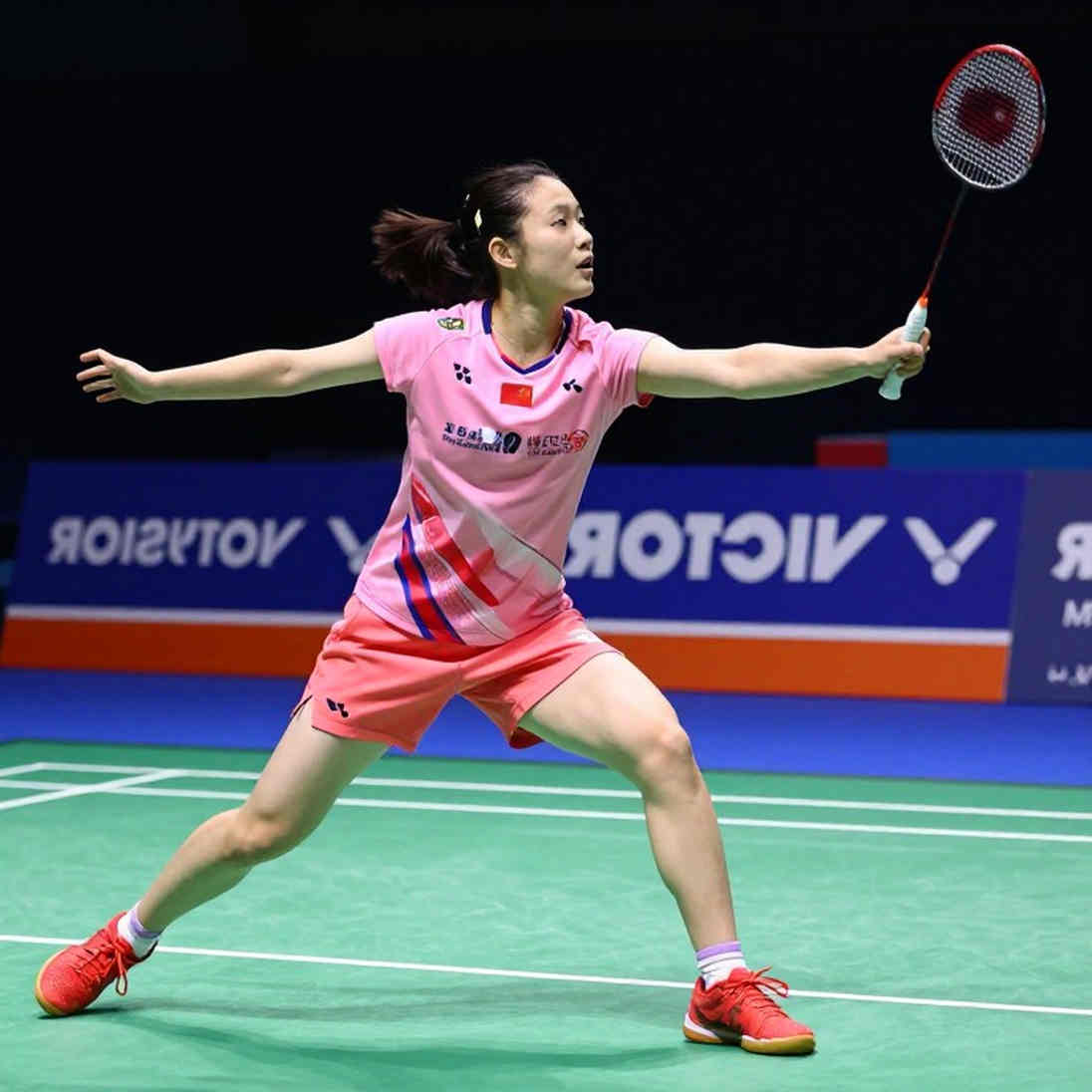
So here is my testable prediction. If Li Shifeng reaches the semifinal or beyond at the Kumamoto Masters, the "anchor to next man" narrative will harden, and that will seed the succession debate in Chinese men's singles. And if any Chinese teenager from qualifying earns a place in the main draw, I will mark this event as a "pipeline event," not as a title haul.
What would prove me wrong: if the reason for Shi Yuqi's withdrawal is publicly confirmed as injury and Li Shifeng exits in round one — then the story swings from "system" back to "fragile anchor," and my call will look mistaken rather than conservative. That is the test I am writing down in advance.